
Statistics Sierra Leone Intensifies Census Awareness Campaign at MOICE Civil Festival Waterloo

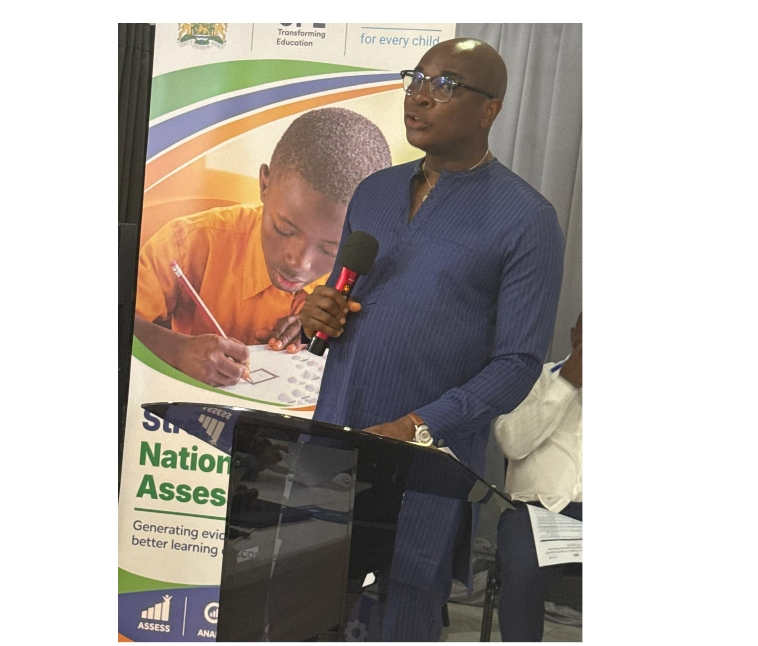
Statistics Sierra Leone Director of Communication and Public Relations Samuel Asumana intensified the awareness campaign for the 2026 Population and Housing Census Tuesday at the MOICE Civil Festival in Waterloo, Western Area District Council.
Addressing participants, Asumana emphasised accurate population data's critical importance as the country counts down to the upcoming national census. He stated censuses are conducted every ten years, noting these exercises provide essential baseline data for government planning, non-governmental organisations and development partners, ensuring equitable resource and infrastructure distribution based on actual community population figures.
Addressing public misconceptions, Asumana strongly urged citizens to de-politicise the census, pointing out that over 99.9% of census data is utilised for national development, research and policy planning rather than political purposes. He advised citizens to ensure they are counted precisely where they sleep on census night, maintaining data integrity and preventing migration-related distortions that could negatively impact regional resource allocation.
Asumana further assured participants that Sierra Leone remains fully on track to conduct its national census in December 2026, following a strategic postponement from December 2025. The delay was granted after an assessment mission by international partners, including UNFPA, the United Nations Economic Commission for Africa and the US Census Bureau, who advised that additional preparation time would ensure higher-quality census results. To meet this goal, Statistics Sierra Leone has completed crucial groundwork, including comprehensive cartographic mapping establishing 23,000 enumeration areas nationwide, a pilot census and a subsequent mock census stress-testing digital instruments, logistics and communications. The mapping process also revealed that approximately 20% of the country lacks cellular network coverage, prompting the agency to plan Starlink satellite internet use, ensuring seamless data collection in remote areas.
Marking a major milestone for national data independence, the Government of Sierra Leone has invested heavily in the upcoming exercise, purchasing over $12 million worth of tablets rather than renting them. These devices will drive a fully digital census, down to the digital identification cards used by enumerators, and will remain government property for future monthly surveys and ongoing initiatives like the Demographic and Health Survey. This infrastructure upgrade underscores the administration's commitment to modernising data collection and ensuring transparency and efficiency in the country's upcoming demographic count.
Emphasising census night on December 1 and counting beginning December 2, 2026, Asumana noted the process has received strong bipartisan backing, referencing the country's two major political parties, the Sierra Leone People's Party and the All People's Congress, which have set aside differences to jointly sensitise the public and encourage nationwide participation, aiming to prevent a repeat of past tensions.
Asumana emphasised the exercise will follow a de facto methodology, counting every individual precisely where they sleep on census night, regardless of whether they are a child, an adult or a visitor.
To ensure accurate resource allocation and prevent infrastructural planning errors, Asumana strongly urged citizens not to engage in census migration, the practice of travelling to a different area just to inflate local population numbers. Moving temporarily to be counted elsewhere misleads the government and its partners when planning for schools, water systems, and public services, often resulting in underutilised "white elephant" projects in neglected regions.
In conclusion, he reminded the public that a census is a demographic tool for development rather than an election, and citizens should remain in their permanent homes so the government can accurately map and serve every community.


Comments