
MTHE, NSTIC Hold Strategic Development, Research Funding and Grants Management Workshop

The Ministry of Technical and Higher Education, in collaboration with the National Science, Technology and Innovation Council, launched the workshop at the ministry’s headquarters in New England Ville. The event brought together officials from MTHE, NSTIC, the National Council for Higher Education, and experts from the Southern African Research and Innovation Management Association.
The workshop is focused on strengthening research governance, strategic planning, and grants management in Sierra Leone, with participants expected to help shape practical steps for improving institutional capacity and access to research funding.
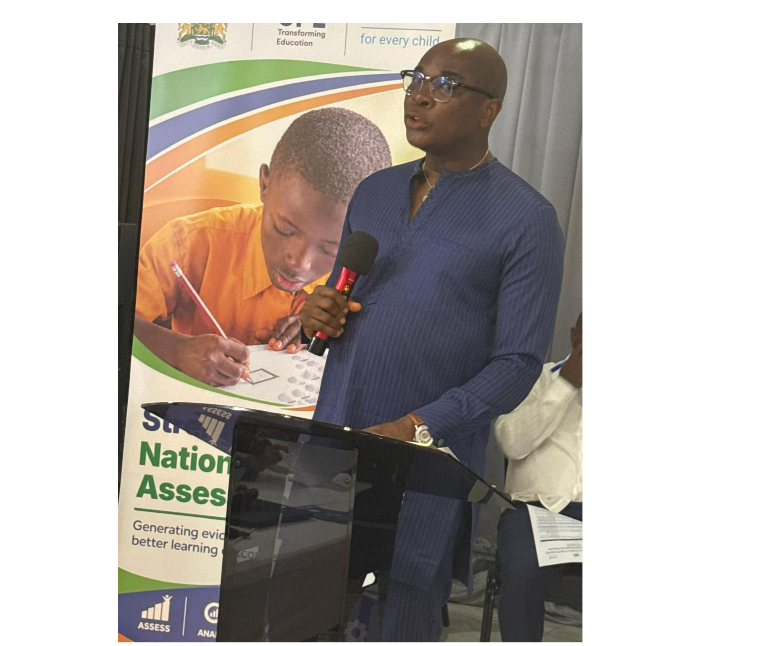
Opening the workshop, Deputy Minister of Technical and Higher Education Sarjoh Aziz-Kamara reaffirmed the government’s commitment to advancing science, technology, and innovation as key drivers of sustainable national development. He described the event as an important step in strengthening NSTIC’s institutional capacity and supporting implementation of the National Science, Technology and Innovation Policy.
Aziz-Kamara said effective strategic planning, sustainable research financing, and sound grants management are essential to supporting research that responds to national priorities, including food security, healthcare, climate resilience, digital transformation, industrialization, and quality education.
He called for closer collaboration among universities, research institutions, government ministries, development partners, the private sector, and civil society in the development of NSTIC’s strategic plan. He also urged participants to adopt international best practices in governance, competitive grant management, financial accountability, and monitoring and evaluation.
Aziz-Kamara thanked the Science Granting Councils Initiative for its continued support and commended NSTIC Chairman Professor Redwood Sawyer and the council for laying what he described as a solid institutional foundation.
He said the government, under President Julius Maada Bio, would continue to promote research, innovation, and human capital development, and urged participants to produce a strong strategic plan aligned with the government’s Big Five Game Changers, the Sustainable Development Goals 2030, and the African Union Agenda 2063.
Director of Science Education Fatmata Kaiwa said the training would support NSTIC in developing its first strategic plan while strengthening research management and improving access to research funding. She said the plan would serve as a roadmap for measuring progress, identifying gaps, and improving the council’s overall performance.
SARIMA Project Manager Zimasa Sobuza reaffirmed her organization’s commitment to strengthening research and innovation management in Sierra Leone. She said the engagement builds on a partnership established through the Science Granting Councils Initiative in 2023 and described the programmed as a peer-learning exercise being implemented in collaboration with the West African Research and Innovation Management Association.
Sobuza said the sessions are focusing on strategic development, partnerships, collaboration, and management of funded research, while also promoting stronger regional cooperation among African research and innovation institutions.
The three-day workshop is expected to strengthen Sierra Leone’s research and innovation ecosystem while improving institutional capacity to attract, manage, and use research funding more effectively for national development.


Comments